Frequently asked questions
-
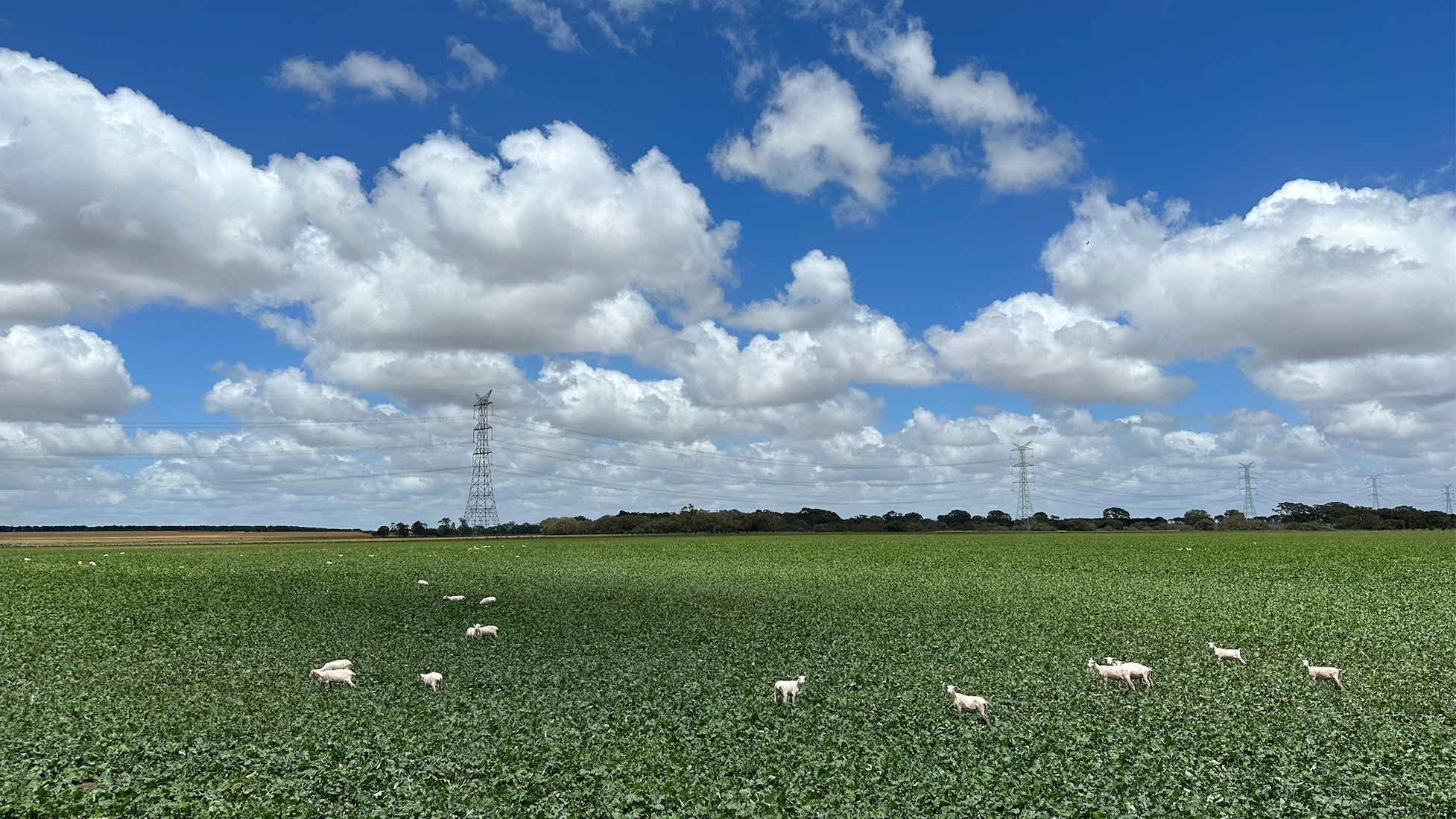
We are proposing to build a battery energy storage system (BESS) approximately 4.5 km south-west of Darlington. The BESS will be just off the Terang-Darlington Road, where the existing 500 kV Moorabool to Tarrone overhead transmission line crosses the road and through our farm ‘Stony Point’. It will include an onsite switchyard to connect directly into the existing transmission line.
-
The exact size of the BESS is yet to be finalised. However, unlike renewable energy generation projects (wind and solar), BESS projects require much less land and don’t have the same risks of impacts on wildlife, including birds and bats. We expect the entire BESS (including substation) will require approximately 25 hectares. We are working on concept designs for further detail.
-
The site was selected due to the existing overhead 500kV transmission line running through the land, and its separation distance to dwellings, access to main roads and ability to use already-cleared agricultural land.
-
Within a two-kilometre radius of the project area, there are three dwellings; one associated with the project, and two not associated.
The project team is in contact with these neighbours to ensure they understand the proposal and respond to any concerns prior to the lodgement of the planning application.
-
The Jamiesons are a multi-generational farming family that have run the ‘Stony Point’ property over six generations.
The family has been a long-term steward of the property and will continue to care for the land as part of this landowner-led BESS development.
The family, with support from developer Alternate Path is developing the proposed Murchs Corner battery energy storage system (BESS), located on Eastern Maar Country outside of Darlington, Victoria.
-
A landowner-led model means the people who know the land best – the local farming families who’ve cared for it for generations – are at the centre of the project.
Unlike large corporate-owned developments, this approach ensures that the economic, environmental, and social benefits stay local.
The landowner partners directly with experienced project managers and technical experts to develop and operate the BESS.
This creates a structure where:
Decision-making stays close to the community.
Income from the project supports local jobs and businesses.
Profits are reinvested locally.
Agriculture remains part of our land’s future.
-
Yes, this landowner-led model allows the Jamiesons to continue farming alongside the energy storage project, creating a diverse and drought-proof income stream that supports both the family and the wider community.
It’s a practical, balanced way to help Victoria transition to clean energy – while protecting Darlington livelihoods and values.
-
The Project is in the early design and planning phase, with technical assessments underway across a broad range of considerations. These assessments will inform the concept design and support a planning permit application. We expect to submit the planning application in late 2025.
The project will require other approvals, including grid connection.
The project team is committed to ensuring the proposal considers, addresses and mitigates relevant considerations and risks.
-
We plan to share updates and gather feedback prior to lodging a planning application in late 2025. When the Application is lodged with the Department of Transport and Planning, you will have the opportunity to formally make a submission and have the State Government consider this when making their decision.
Neighbours within 5km of the site will be consulted as a priority, followed by the wider Darlington community at a community drop-in session on Wednesday 12 November. The session presents an opportunity to make initial comments and have those considered in the planning application.
Date: Wednesday 12 November 2025
Time: 3-6pm
Location: Darlington Hall
-
The Jamiesons are proud to be part of the local community and want to make a real, lasting difference here.
The benefit sharing approach will be collaborative, practical, and tailored to the needs and priorities of the people who live and work in this region.
As the project develops, the family and project team will actively engage with Moyne Shire Council, local residents, community groups, and the Eastern Maar to explore opportunities that bring genuine local benefits.
If you have an idea or project you’d like to see supported, we’d love to hear from you.
consultation@cogencyaustralia.com.au | 0452 593 428
-
The site is zoned Farming Zone (FZ) and is currently used for broadacre grazing. Initial investigations suggest the site is free from major constraints and is generally suitable for a BESS.
The site is also located on the edge of the South West Renewable Energy Zone (SWREZ), identified in VicGrid’s Draft Victorian Transmission Plan (2025). The Mortlake region is already a key hub for renewable energy, home to several major projects including the Darlington and Mount Fyans Wind Farms.
-
A BESS is designed to store and release energy and provide support to stabilise the electricity grid. It helps balance energy supply and demand, supports grid stability, and stores energy from a variety of energy sources, including renewable sources.
Battery storage is a critical enabler of the energy transition, designed to store and release energy and provide support to stabilise Victoria’s electricity grid.
Murchs Corner BESS will store energy generated from the grid (including from renewable projects) and dispatch it during periods of high demand, helping to stabilise the electricity grid and reduce reliance on fossil fuels.
-
A battery energy storage system is likely to include:
BESS units
Inverters and transformers
Switch rooms, control building, substation and associated electrical infrastructure
Storage containers and water tanks
Operations and maintenance building
Car parking, access points and internal tracks
Firebreaks
Security fencing and monitoring systems
Earthworks
Associated buildings and works
-
MW is an abbreviation for megawatts. It is the measurement of the rated power capacity of a BESS, being the total possible discharge capability starting from a fully charged state.
MWh is an abbreviation for megawatt-hours and is how the storage duration of a BESS is measured. It is the amount of energy can be stored in the BESS.
-
BESS units are specifically designed to manage and mitigate fire risk and will include comprehensive safety features within both the hardware and software technology.
The Battery Energy Storage Systems (BESS) is likely to use lithium-ion technology. While fires associated with BESS technology are rare, there are risks and hazards that need to be managed in their design, construction and operation.
Lithium-ion batteries, if damaged or faulty, can experience a thermal runaway event which may result in a fire. Thermal runaway in lithium-ion batteries is an overheating of the battery cell, which results in a chemical reaction. This process occurs when the temperature within the battery cell exceeds a certain point — that is, the heat generated is greater than the heat that is dispersed.
Designed to meet industry-leading safety standards, this battery system will be equipped with safety systems which continuously monitor, detect, isolate and alert the operators to any potential anomalies. This mitigates any risks of fires occurring or propagating between containers.
While fires are rare, we take the concern seriously and have engaged a specialist fire risk advisor for the Project. A dedicated Risk Management Plan is also being prepared, in accordance with the Design Guidelines and Model Requirements: Renewable Energy Facilities 2023 (CFA Guidelines).
The CFA Guidelines provide specific fire detection and protection requirements including the installation of firefighting water supplies, detection and suppression systems, as well as bushfire protection measures. Access tracks will ensure efficient and safe access to the site for fire trucks. The project team is engaging with the CFA to discuss how the project can support brigades in the area.
-
While the land sits within a Bushfire Prone Area, it is not subject to a Bushfire Management Overlay, which applies only to areas of higher bushfire risk.
Engagement with local Country Fire Authority (CFA) brigades in Darlington, Dundonnell, Derrinallum and Mortlake has been prioritised to ensure best-practice fire management.
-
There will be some localised noise associated with the construction and operation of the proposed BESS, however the distance to dwellings is significant and means that noise management is straight-forward. Within a two-kilometre radius of the site, there are three dwellings; one associated with the project, and two not associated.
During the construction phase, anticipated noise will be associated with activities such as earth works, civil works and truck deliveries or movements. All construction activities will occur during designated hours and will occur in line with the approved Construction Environmental Management Plan.
During operations, BESS can create some noise. The main source of noise is associated with the inverters and cooling fans required to regulate the operating temperature of individual battery cells. The proposed BESS will be strategically positioned and designed to minimise noise exposure.
Detailed noise assessments and studies are currently underway by a specialist noise consultant to ensure that the design and operation of the BESS is in line with EPA noise guidelines and within applicable limits. This assessment will also inform whether the proposed BESS will require some form of noise attenuation measures (i.e. noise attenuating walls) to ensure ongoing compliance.
-
The short answer is no. A BESS is energy-agnostic.
The long answer is that a BESS supports renewable generation by balancing out supply and demand, and being an energy service provider (system security, balancing, optimisation, etc). While not a renewable energy technology themselves, BESS projects are an important element to the renewable energy transition. BESS projects can also participate in a range of other markets for ‘essential system services’ – for example, markets for frequency control services. These services help keep the grid operating in a safe and secure envelope.
-
The project will include native vegetation screening on site boundaries to ameliorate views to the BESS. Given the significant distance to neighbours and topography of the land, the proposed location reduces visual exposure.
-
Cobalt is a material that is used in some types of batteries, namely for use in electric vehicles and can be associated with human rights concerns. Those batteries are known as NMC, or Nickle-Manganese-Cobalt batteries.
Utility-scale battery energy storage projects typically use LFP, or Lithium-Iron-Phosphate battery cells. These cells deliver best the operational performance and safety features well suited for grid applications.
-
It is anticipated that recycling will become available by the end of the project life due to the value of the metals in the batteries and ability to re-purpose to secondary markets (for example, car and phone batteries). A decommissioning plan will be developed as a condition of the planning permit.
While there are no commercial-scale recycling efforts for BESS units yet, concerted efforts to create an onshore recycling industry is emerging in Australia (i.e. Energy Renaissance).
-
The battery will participate in the energy market, charging during times when there is excess renewable energy and low prices, and discharging that energy at times when demand on the grid is higher. Overall, having more low-cost renewable energy in the system, firmed by storage, will result in the lowest cost energy transition.